02/06/2026
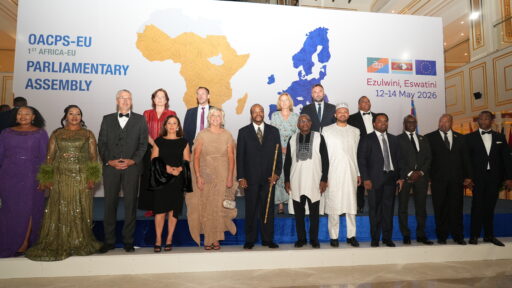
The Kingdom of Eswatini successfully hosted two significant parliamentary gatherings in May 2026: the OACPS Africa Regional Parliamentary Assembly from 7–11 May and the inaugural Africa–European Union Parliamentary Assembly from 12–14 May in Ezulwini.
Held under the gracious patronage of the Kingdom of Eswatini, the meetings brought together parliamentarians, government officials, diplomats, regional organisations, development partners and civil society representatives from Africa and Europe to advance dialogue on shared priorities including peace and security, youth development, women’s economic empowerment, critical minerals partnerships, culture and creative industries, and multilateral cooperation.
The hosting of these historic assemblies reflects the Kingdom’s commitment to fostering international partnership, regional integration and sustainable development under the leadership of His Majesty King Mswati III, whose vision continues to position Eswatini as a trusted partner in promoting peace, stability and prosperity across Africa and beyond.
The formal opening of the Africa–EU Parliamentary Assembly at the Ezulwini Palazzo International Convention and Conference Centre featured addresses by representatives of the Kingdom of Eswatini, including His Royal Highness Prince Lindani and the Speaker of the House of Assembly, alongside the Co-Presidents of the Africa–EU Parliamentary Assembly. Delegates from both continents engaged in extensive discussions on strengthening Africa–Europe relations and implementing the Samoa Agreement, the framework governing cooperation between the European Union and members of the Organisation of African, Caribbean and Pacific States (OACPS).
A notable feature of the Assembly was the strong participation of Eswatini parliamentarians and institutions. Members of Parliament from the Kingdom contributed to discussions on youth mobility and education, women’s empowerment in agricultural value chains, and the promotion of culture and creative industries as drivers of economic growth and social cohesion. Delegates also participated in field visits showcasing Eswatini’s investment, vocational training and cultural sectors, highlighting the Kingdom’s development achievements and future potential.
The Assembly culminated in the adoption of a comprehensive Recommendation to the Africa–EU Council of Ministers, addressing key issues such as peace and security, youth empowerment, women’s economic participation, critical minerals partnerships, sustainable industrialisation, cultural cooperation and reform of global governance institutions. Delegates underscored the importance of parliamentary diplomacy in strengthening mutual understanding and ensuring effective oversight of Africa–Europe cooperation.
Among the major outcomes were calls for increased investment in youth education and mobility programmes, enhanced support for women farmers and entrepreneurs, greater value addition to Africa’s critical minerals, expanded cultural exchanges, and stronger Africa–EU cooperation in addressing global challenges through effective multilateralism. These priorities align closely with the aspirations of the African Union’s Agenda 2063 and the shared vision of a prosperous and interconnected Africa.
For the Kingdom of Eswatini, the successful hosting of these assemblies represents a significant diplomatic milestone. It demonstrates the country’s capacity to facilitate high-level international engagement while showcasing Eswatini’s political stability, hospitality and commitment to constructive dialogue. It further reinforces the Kingdom’s standing as an important bridge between Africa and Europe and a champion of cooperation in pursuit of shared development goals.
As Africa and Europe deepen their partnership, the Kingdom of Eswatini remains committed to advancing dialogue, fostering mutual respect and promoting sustainable development for the benefit of current and future generations, guided by the enduring leadership and vision of His Majesty King Mswati III.
